
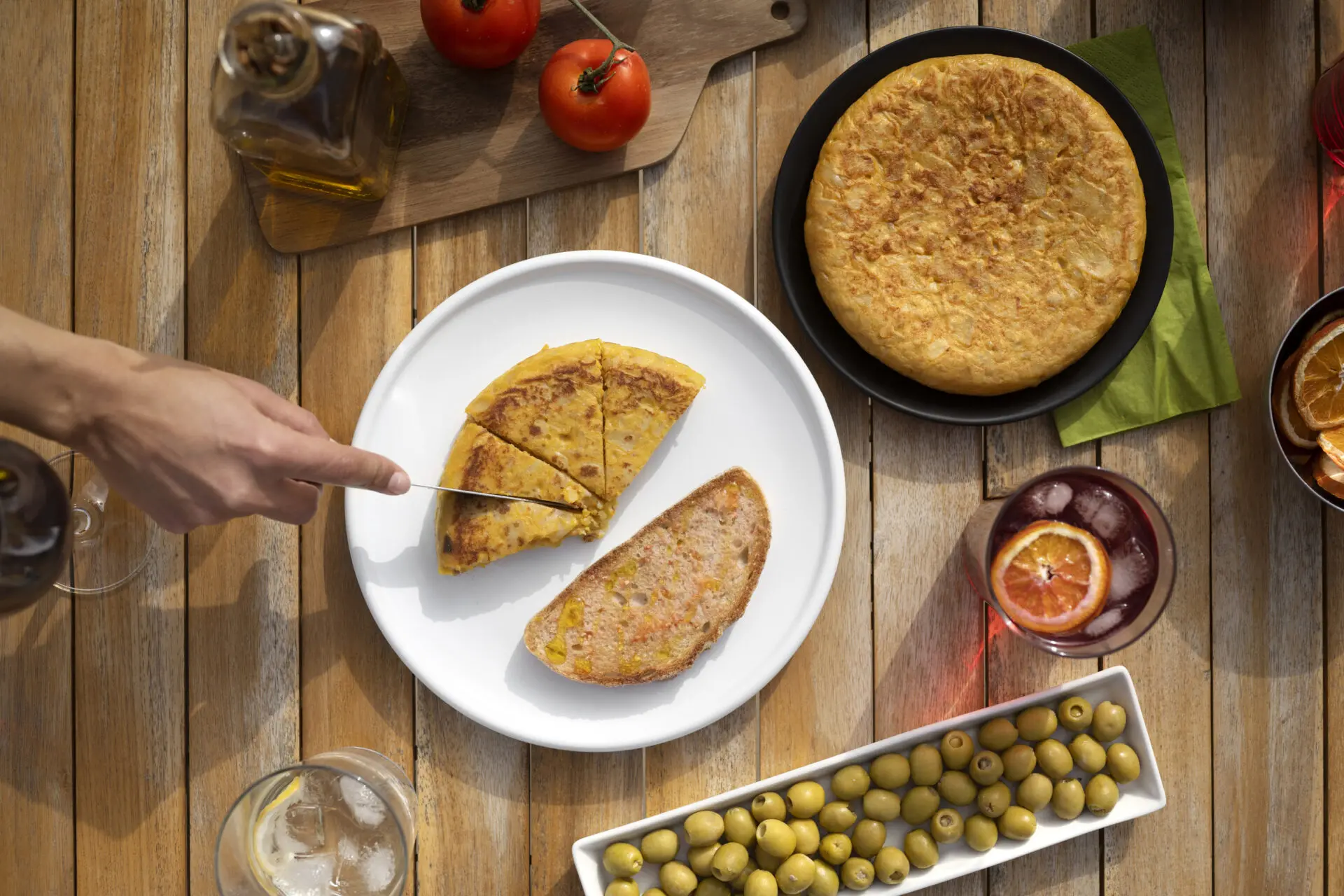
Few dishes capture Spanish home cooking quite like the humble Spanish omelette, or tortilla española. With just eggs, potatoes, olive oil — and sometimes onions — it’s a simple dish that’s comforting, healthy and incredibly versatile.
It can be served warm or at room temperature, as a tapa or a light meal. The ingredients are straightforward, but getting the texture just right takes a little practice. At La Española, we love a good tortilla, and here we’re sharing a few practical tips along with some delicious variations inspired by both classic and modern recipes.
What Makes a Spanish Omelette Special?
Unlike a French omelette, a Spanish omelette is thicker, more substantial, and cooked more slowly. The potatoes are gently softened in olive oil before being mixed with eggs, giving the finished dish a soft, almost creamy centre with a lightly set outer layer.
It’s a dish that works at almost any time of day — breakfast, lunch, dinner or tapas — which goes some way to explaining why it’s so well loved across Spain.
Step-by-Step Tips for the Perfect Spanish Omelette
1. Choose the right potatoes
Waxy potatoes hold their shape best and cook more evenly. Slice them thinly so they soften gently rather than crisping up. The aim is tenderness, not crunch.
Tip: Keep the heat fairly low and stir occasionally to avoid browning.
2. The onion question
In Spain, whether or not to include onions is still up for debate. Some cooks swear by them for the sweetness they bring, while others prefer a simpler potato-only version.
Either way is perfectly valid, so it really comes down to preference. If you do include onions, cook them slowly until soft and lightly caramelised.
3. Let the mixture rest
Once you’ve combined the potatoes with the beaten eggs, leave the mixture to sit for a few minutes. It gives the potatoes time to absorb some of the egg and helps the tortilla cook more evenly.
4. Cook gently
Pour the mixture into a lightly oiled non-stick frying pan and leave it to cook without stirring. A gentle heat allows the inside to stay soft while the outside sets properly.
5. Master the flip
Turning the tortilla — la vuelta — is the part that tends to worry people most. Place a plate over the pan, hold it firmly, then flip the tortilla in one steady motion before sliding it back into the pan.
If you’d rather not flip it, you can finish it under the grill or in the oven.
6. Serve at the right temperature
A Spanish omelette is rarely served straight from the pan. Letting it rest improves both the flavour and the texture, and makes it easier to slice. Many people prefer it at room temperature.
Spanish Omelette Variations
Once you’re comfortable with the basic method, it’s easy to adapt.
A rustic version

Our Rustic Spanish Omelette includes ingredients like chorizo, Serrano ham, peppers, peas, and spring onions. It turns the dish into something a little more substantial, with plenty of colour and flavour.
With onions and mushrooms
This Spanish Tortilla with Onions and Sautéed Mushrooms adds a deeper, earthier flavour. The mushrooms work well alongside the soft potatoes and eggs, bringing a bit more richness without overcomplicating the dish.
A truffle twist
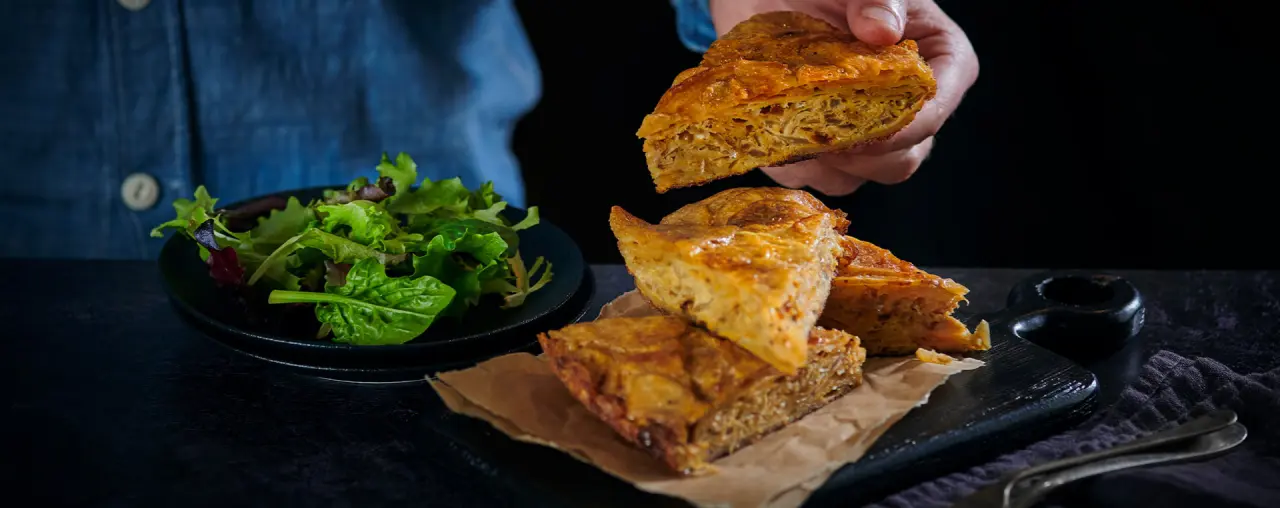
For something a little different, try a Truffle Tortilla. This version uses La Española Olive Oil Flavoured with White Truffle, along with caramelised onions and — somewhat unexpectedly — potato crisps.
Letting the crisps soften in the egg mixture creates a shortcut that still gives a familiar texture.
Common Mistakes to Avoid
- Cooking the potatoes too quickly — they should soften, not crisp
- Using too much heat — this can make the eggs rubbery
- Skipping the resting step — the texture won’t be as good
- Overcooking — the centre should stay slightly soft
A good tortilla is more about patience than precision.
Serving Ideas
Spanish omelette is easy to adapt to different occasions:
- Cut into wedges for tapas
- Serve with a green salad for lunch
- Tuck into crusty bread with a drizzle of extra virgin olive oil
- Add roasted vegetables for a simple dinner
Mastering a Spanish omelette isn’t about following strict rules — it’s about getting a feel for the process. Once you’re comfortable cooking the potatoes slowly, balancing the eggs, and flipping with confidence, it becomes second nature.
For more olive oil tips and Mediterranean recipes, take a look at our blog.
Frequently Asked Questions: Spanish Omelettes
What’s the difference between a Spanish omelette and a regular omelette?
A Spanish omelette is thicker and made with potatoes cooked in olive oil, whereas a typical omelette is thinner and cooked quickly, often with fillings folded inside.
Should a Spanish omelette be runny inside?
It should be soft and slightly creamy in the centre, but not raw. When sliced, it should hold its shape while still feeling tender.
Can I make it ahead of time?
Yes. Tortilla española is often made in advance and served at room temperature.
What pan works best?
A non-stick frying pan around 20–25 cm wide works well, helping the omelette keep its shape and making it easier to turn.
Can I add other ingredients?
You can. Mushrooms, peppers, ham, or chorizo are all popular additions, and some recipes include modern touches like truffle oil or even potato crisps.
How long does it keep?
Stored in the fridge, it will keep for up to three days. It can be reheated gently over a low heat or enjoyed at room temperature.